
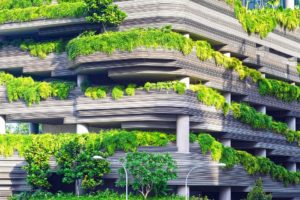
This image was taken from pixabay

The increasing number of buildings being built in big cities has caused several groups to question these buildings’ environmental and social impacts. The truth is that conventional buildings use a lot of energy, produce much waste, and emit greenhouse gases that negatively impact public health and the sustainability of the environment. Considering the negative impact of these buildings, beginning in the 1990s with the founding of the US Green Building Council in 1993, the rising trend within the international community is to turn to green construction. In essence, green construction is a building construction model that aims to eliminate or reduce the negative impact buildings have on the environment in the design phase, during construction, and when the building is fully operational.

Green construction involves using materials that do not damage the environment, construction processes that use leftover building materials, and construction methods that do not result in waste or emissions above the tolerance level threshold. In addition to employing design and building construction processes focusing on efficiency and mitigating the environmental impact, the purpose of green construction is to create green buildings that are cost-effective to operate. Several technologies used in green buildings include solar panels and wind energy sources, under floor radiant cooling systems to reduce air conditioning consumption and passive ventilation systems that supply air to and remove air from the building without using a mechanical system. These technologies make it possible to significantly reduce building operational and maintenance costs in the long term.

Based on a SmartMarket report in 2016, the number of green buildings worldwide continues to double every three years, and their popularity continues to increase. Thus, it has become clear green building not only reduces a building’s negative impact on the environment but also is more profitable. In the future, construction sector companies using the green construction concept to build green buildings will reap a double benefit by contributing to environmental sustainability and generating greater profits.


Gambar diambil dari thenounproject

Apa yang ada di benak Anda ketika mendengar kata ‘2020’? Ya, mungkin kita semua memiliki pemikiran yang sama tentang tahun yang ‘spesial’ itu. Pandemi Covid-19 membuat kita tak lagi bisa menjalankan kebiasaan hidup yang lama. Suka tidak suka, mau tidak mau, kita pun harus cepat beradaptasi dengan kebiasaan hidup yang baru. Tidak hanya dari kebiasaan dari sisi kesehatan, tetapi juga kebiasaan bekerja bagi kita yang selama ini bekerja di kantor.

Peraturan pemerintah yang mewajibkan perkantoran menerapkan Work from Home (WFH) bagi karyawannya di awal pandemi mungkin membuat kebanyakan orang kaget dan tidak siap. Meskipun sudah satu tahun berlalu dan WFH tidak lagi menjadi hal yang baru, mungkin beberapa dari kita masih ada yang gagap dengan etika berkomunikasi saat konferensi/rapat video melalui aplikasi WhatsApp, Zoom, dsb .

Berikut, kami rangkum beberapa etika berkomunikasi saat konferensi/rapat video seperti yang dilansir dari Ultraindonesia.com.

  • Tetap menggunakan baju kerja

Sebelum mulai, pastikan untuk menggunakan baju selayaknya kita sedang bekerja di kantor.

  • Menggunakan mode tanpa video dan tanpa suara jika sebagai peserta

Apabila kita hanya bertindak sebagai peserta, lebih baik untuk menggunakan mode tanpa video dan tanpa suara untuk menjaga fokus konferensi/rapat.

  • Melambaikan tangan bila ingin bertanya

Jika ada yang kurang jelas atau ingin ditanyakan, kita bisa melambaikan tangan untuk memberikan tanda dan menyampaikannya saat sudah diberi kesempatan untuk berbicara.

  • Berdiskusi melalui Chat Box

Jika ada yang ingin didiskusikan tanpa mengganggu jalannya konferensi/rapat, kita bisa menggunakan Chat Box.

Demikian beberapa etika yang bisa kita terapkan agar konferensi/rapat video saat WFH berjalan dengan lancar dan materi yang didiskusikan bisa tersampaikan dengan baik. Semoga bermanfaat!

This image was taken from Flickr

Finance Minister Sri Mulyani Indrawati announced that the government will increase cigarette excise tariffs by 12.5% on average from February 2021, based on several aspects and considerations. She explained that excise on SPM (Machine-Made White Cigarettes) for SPM Tier 1 will increase 18.4% to Rp 935 each, SPM IIA will increase 16.5% to Rp 565 each, and SPM IIIB will increase 18.1% to Rp 555 each. There will also be a SKM (machine-made kretek cigarettes) Tier I increase of 16.9% to Rp 865 each, SKM Tier IIA increase of 13.8% to Rp 535 each, and SKM IIIB increase of 15.4% to Rp 525 each.

Sri Mulyani explained that the increase was decided by the average production volume for each tier. She explained that the SKT segment will not see any increase because this segment absorbs the most manpower. She added that after the increase, the estimated cigarette production growth for SKM and SPM will decrease by around 3.2 percent or 288 billion cigarettes. Furthermore, the government expects the prevalence of child smokers to fall 1.26 percent, from 33.8 percent in 2020 to 32.2 percent in 2021.

Source: Merdeka.com, Jan 27, 2021:

https://www.merdeka.com/uang/ini-tarif-baru-cukai-rokok-untuk-2021-mulai-berlaku-februari.html

helllo