

Although the Transit Oriented Development (TOD) development concept has been widely adopted as a city development approach by cities of the world, many remain unaware of the TOD concept. Basically put, TOD is a city planning concept that focuses on the optimal use of public transport transit areas.
The concept combines various commercial and residential areas so that they are within comfortable walking distance of transit stops. All residential, office and recreational facilities in TOD areas must be integrated with mass transportation systems such as the BRT, busway, MRT, LRT, and Commuter Rail System, and also have pedestrian and bicycle networks.
It is hoped that once a city has a public transportation network integrated with its residential and commercial areas, many of its residents will switch from using private vehicles to public transportation, and this will bring about a reduction in traffic congestion and air pollution within the city.
In Indonesia, many present-day housing developers are offering housing in TOD areas to match the market demand increasingly influenced by the growing numbers of millennial consumers. The TOD housing concept is considered to appeal to the millennial generation, who tend to be practical, economical, and require an integrated public transportation system to commute to work.
In the TOD residential areas offered by these developers, the residential areas are built as close as possible to public transportation access points so that residents can quickly and easily access public transportation stops on foot. The development of mass transportation networks, including the MRT, LRT, and high-speed train systems, in Indonesia is expected to increase the marketability of TOD housing in the future.
Reflecting on the experiences of other cities such as Hong Kong and Singapore, the use of the TOD concept appears to present an effective solution for any city government wanting to reduce traffic congestion and air pollution to create a healthier city. From a business perspective, urban area developers must be aware of the high market demand for housing projects integrated with mass transportation (TOD) that will only increase in the future, and take advantage of this opportunity to achieve maximum gains.

 CEO of PT Chandra Asri Petrochemical Tbk. (IDX:TPIA), Prayogo Pangestu, stated that the company plans to start the construction of its joint venture with tire maker Michelin & Cie (ML) in November.
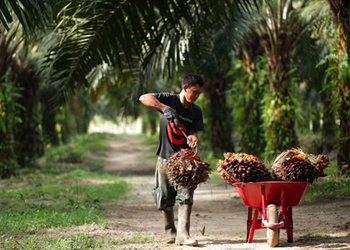 CEO of palm oil firm Golden Agri Resources, Franky Oesman Widjaja,
  Unfavorable commodity prices and general economic downturn are discouraging heavy equipment leasing providers from further expansion. Surya Artha Nusantara Finance (SAN Finance), for example, is planning to diversify into vessel and CPO financing, due to weakening demand in the mining sector.
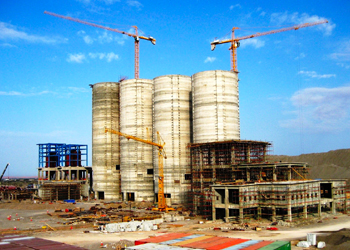 Cement sales are set to continue to increase this year, matching the expectations of manufacturers who tried to keep up with demands by opening new plants last year. Among the new facilities opened in 2012 were a new PT Semen Indonesia Tbk. plant in Tuban, East Java, and another in Pangkep, South Sulawesi, belonging to PT Semen Tonasa, which is still affiliated with Semen Indonesia.
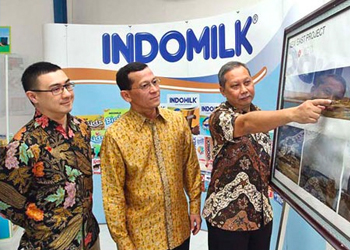 Dairy processing company PT Indolakto, which is affiliated with PT Indofood CBP Sukses Makmur (ICBP:JKT),
  Government-owned company that operates seaports in Java and Kalimantan PT Pelabuhan Indonesia (Pelindo) III is pursuing five strategic projects to develop Tanjung Perak port of Surabaya, East Java, according to